Building in an AI-native startup usually means the technology moves faster than human behavior. The gravity of a fast-paced sprint pulls you toward your design tools, urging you to slap an interface on the newest data model and ship it by the end of the day.
But if you want to survive the ambiguity and actually build something users want, you have to do the hardest thing possible when under high time pressure: Hit the brakes and zoom out one level.
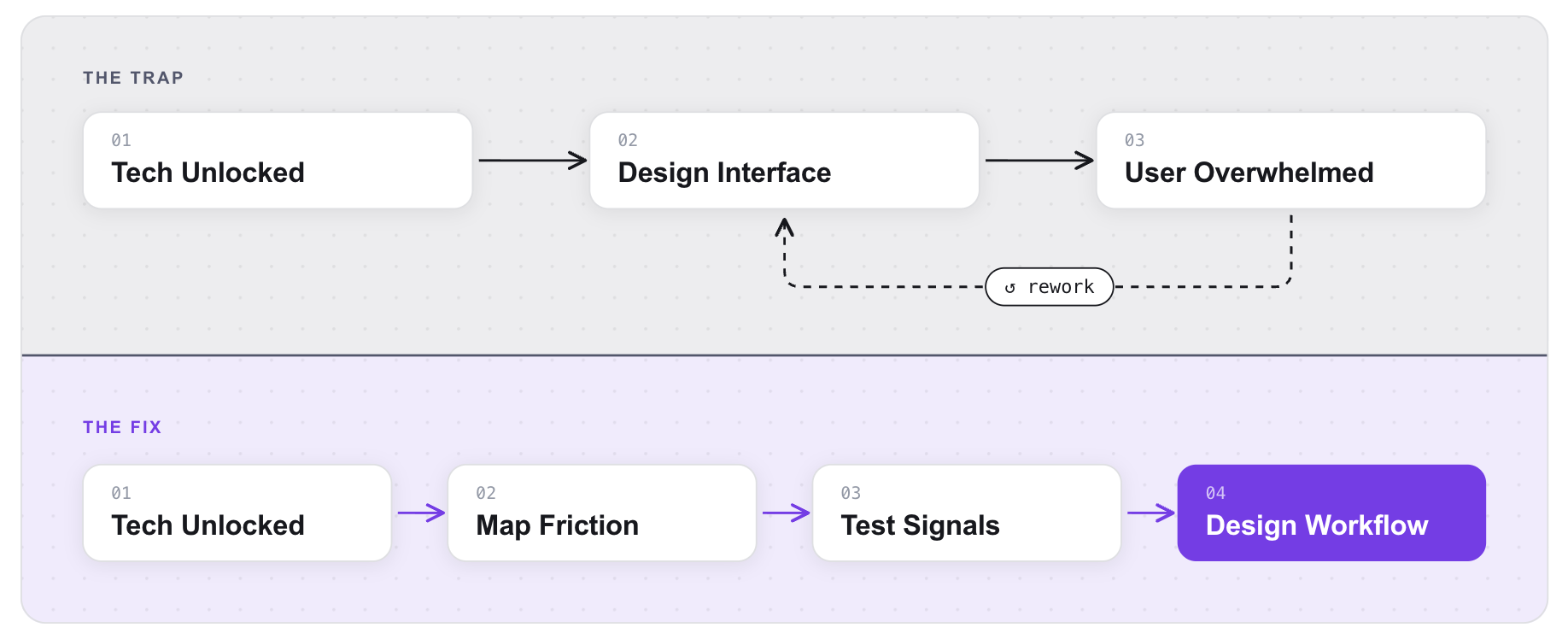
The greatest trap in emerging tech is designing for the capability rather than the friction.
Redefine "Slow" in a fast environment
Let’s be clear about what "slowing down" actually means. It doesn’t necessarily mean asking leadership for a two-week research sabbatical. Instead, "Slowing down" can simply mean relentlessly prioritizing problem validation over immediate UI execution.
It means resisting the urge to open Figma or Claude Design on day one. I use AI to accelerate my research, synthesizing past customer transcripts and mapping workflows in a matter of hours, not days. You aren't doing nothing, you are just ensuring you are doing the right thing before you start pouring your time into pushing pixels.
Drop the anchor: The Drawing Review case study
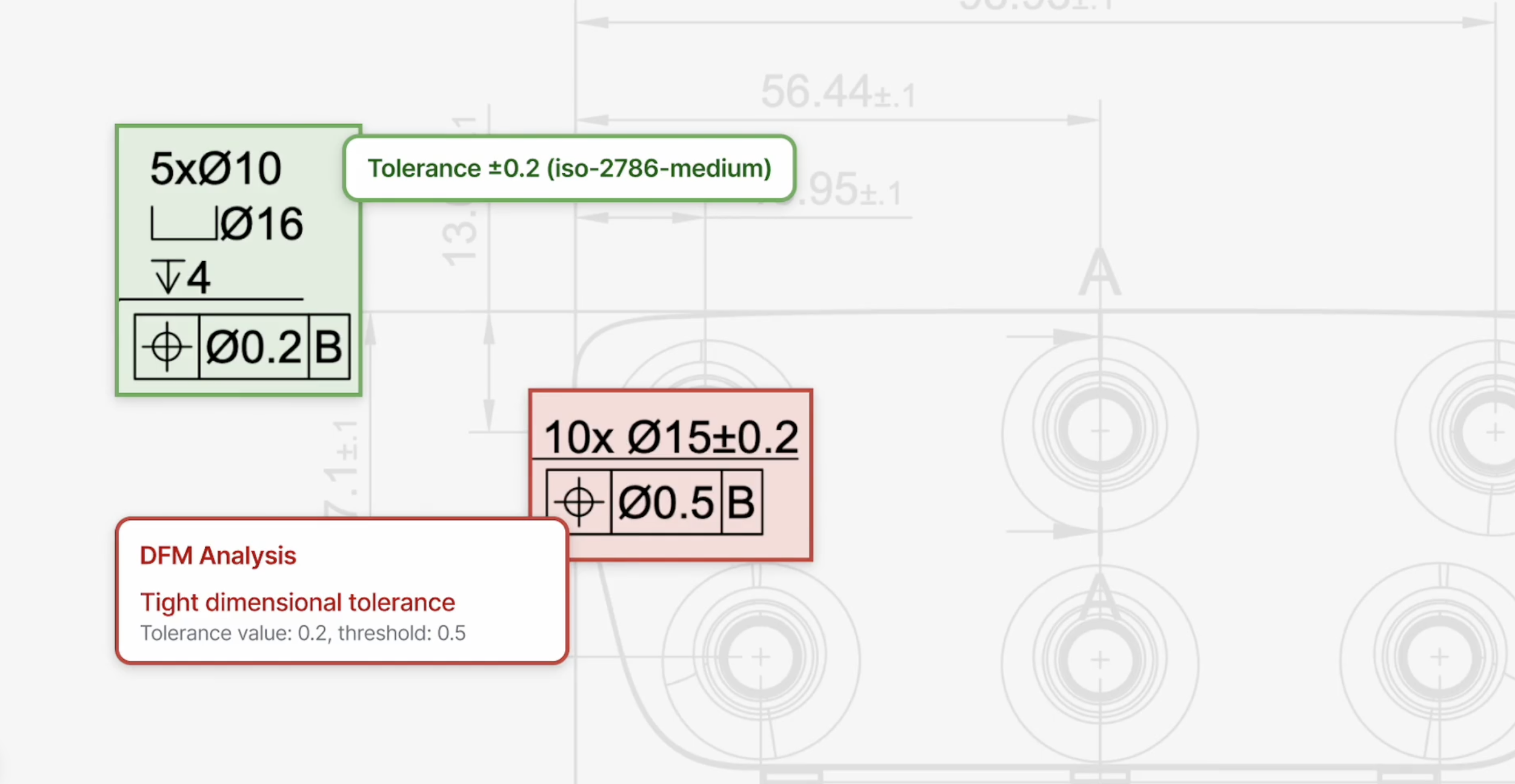
I navigated this recently while working on the new drawing review experience for our B2B platform. Our engineering team had built something truly powerful: a backend utilizing a novel data model capable of autonomously analyzing complex 3D models and 2D mechanical drawings to flag manufacturability risks.
Technically, it could do almost anything. But when you are designing for professional mechanical engineers, "doing anything" usually translates to "overwhelming everything." Building AI for hardware means respecting that the stakes are physical and expensive. We had an incredible backend, but how our users would actually benefit from this vast potential was entirely unclear.
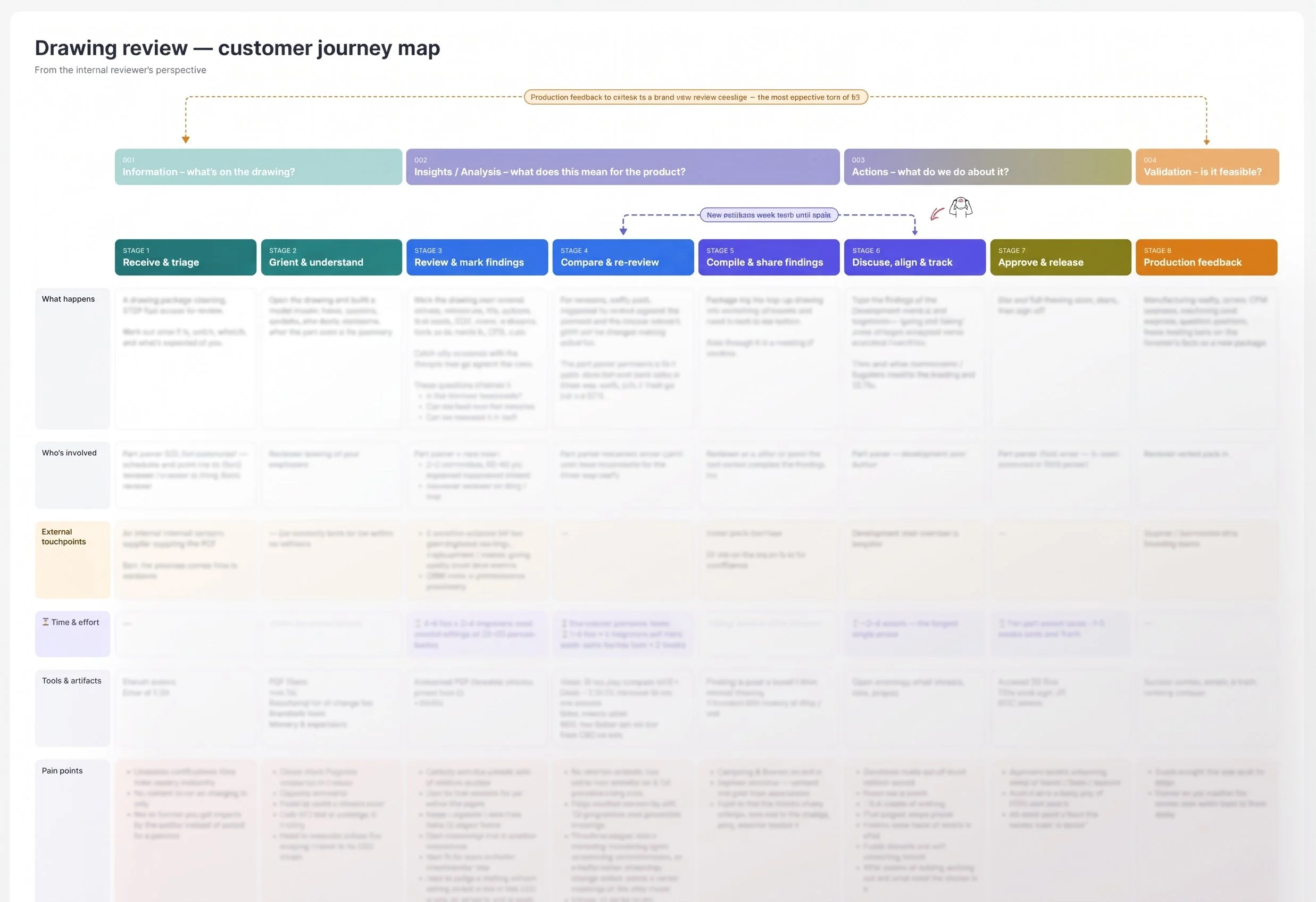
To move fast, I walked away from the technical specs and went back to the baseline customer journey. Before GenAI, how did a mechanical engineer actually get their job done? I mapped out every step of their manual drawing review process and the pain points that came with it. I didn’t look for where the AI could fit; I looked for where the human was struggling.
Test the waters with raw signals
With the journey mapped, I didn’t disappear to build a high-fidelity prototype. We needed behavioral signals immediately. We put early, rough proof of concepts in front of our customers as conversation starters.
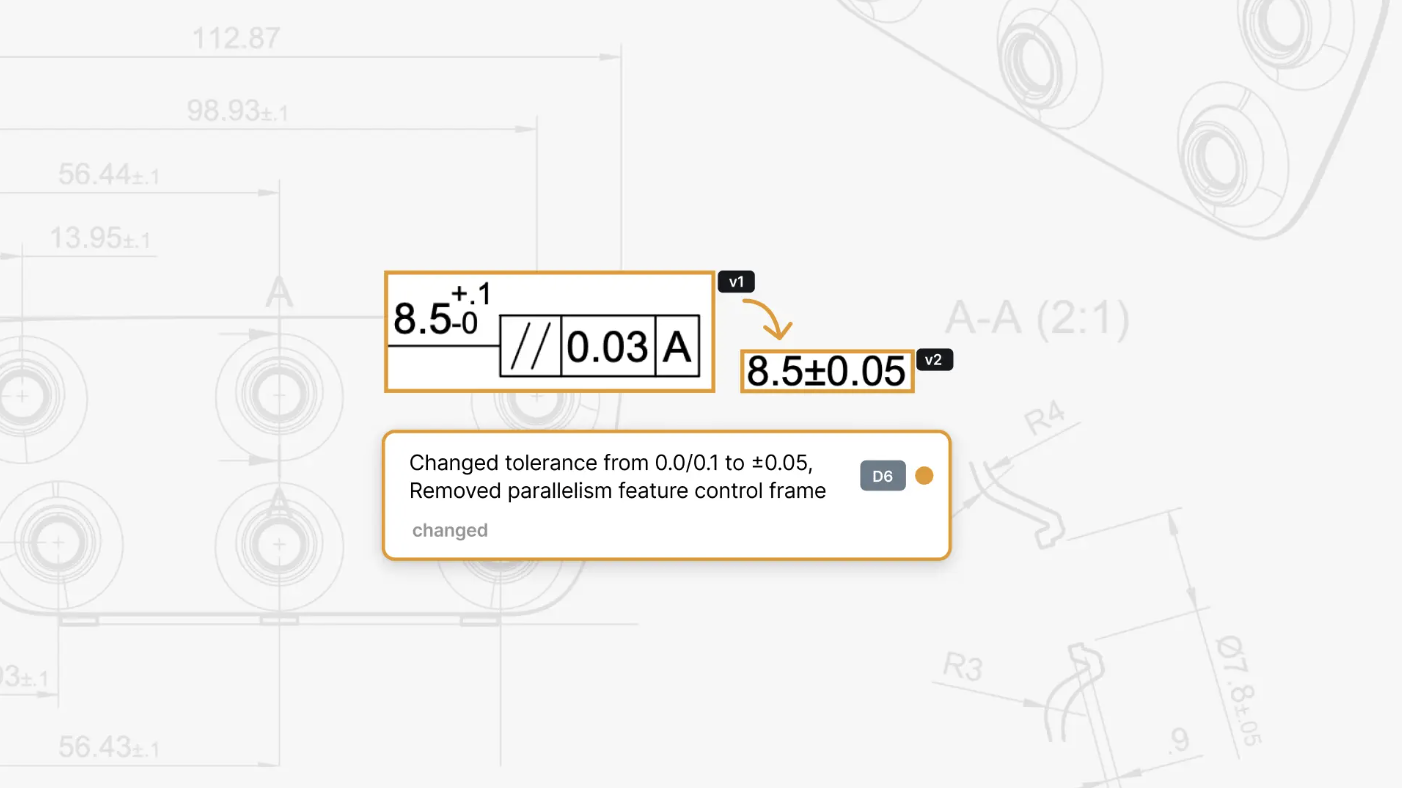
In one session, we showed a senior mechanical engineer a concept where the AI analyzed a massive drawing to flag risks and show diffs between revisions. He was genuinely amazed, noting this capability could save his team weeks of manual review in one go. But as we dove into how he would use it, we uncovered the nuanced reality of his workflow.
"My stamp still goes on this," he reminded us. He didn't want an AI making decisions in a black box. Instead, he wanted it to surface patterns. If a specific error kept appearing across drawings, he wanted the system to highlight that trend instantly so he could flag a systemic issue to the broader team early on. For him, the transparency of the history and the reasoning behind each flagged change was what gave him the confidence to make the final call himself.
That single conversation was the translation layer we desperately needed. Mechanical engineers didn't want a chatbot trying to do their job, they wanted a contextual copilot. They needed the AI to sit in the background of their shared canvas, surfacing relevant drawing changes and risks before the design freeze. The goal wasn't to replace their stamp of approval, but to give them the evidence before they take action on it.
Align the org and handle pushback
When you choose to prioritize research over immediate design, you will inevitably face pushback. Engineering is eager to ship the brilliant capability they just built, and founders want momentum.
Communication is my primary design tool here. Don’t fight engineering, bring them to the table. Everyone brings their own lens to the ambiguity: engineering brings the technical possibilities, while I bring the baseline user friction.
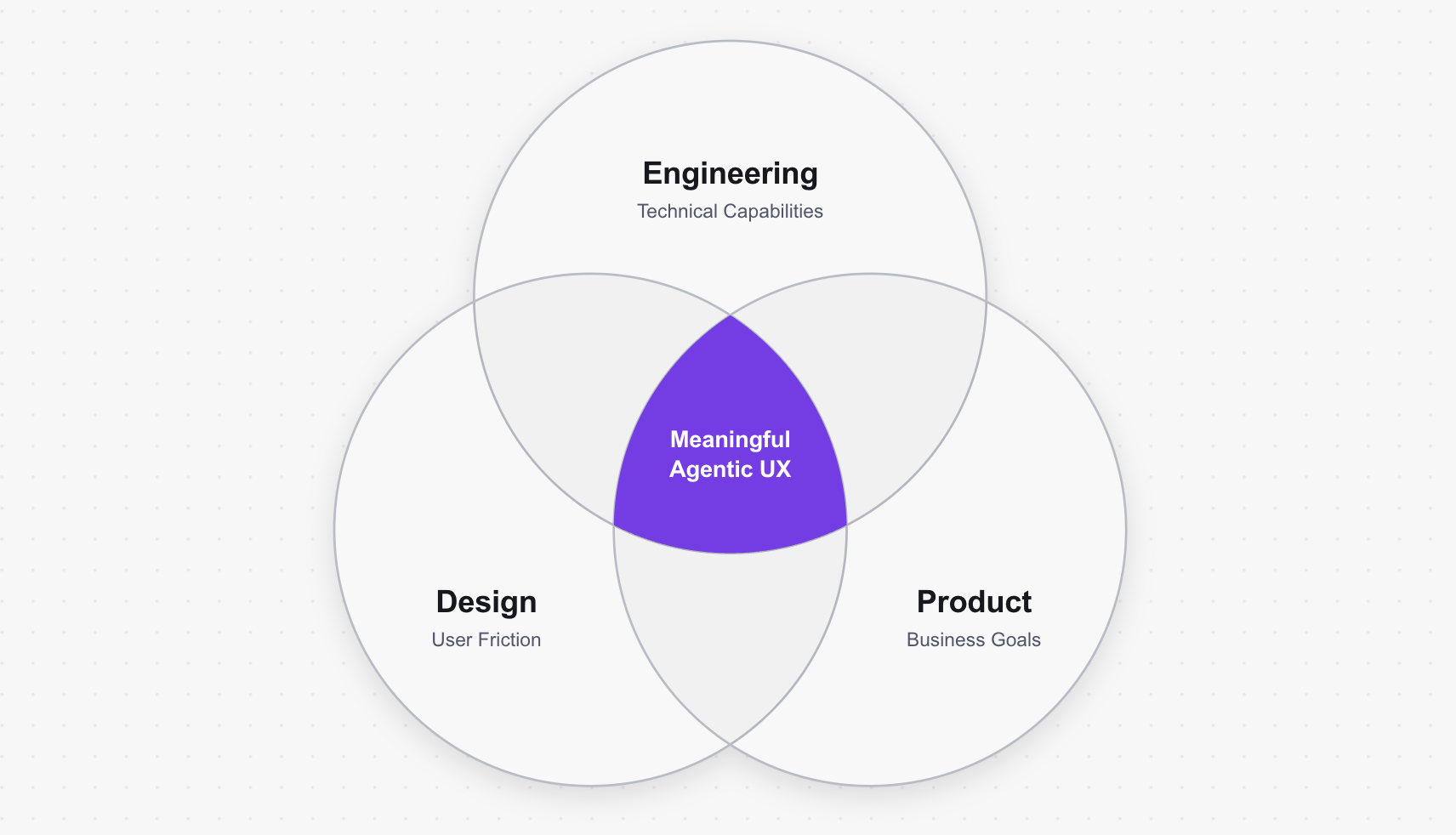
Crucially, keep our Product Manager tightly in the loop. The technical approach and the UX will pivot constantly as we learn from moments like that POC session. By over communicating with PM, we ensure that despite the shifting technical sands, the core business goal remains aligned. No one should be a roadblock, we are orchestrating a shared understanding.
Translate capabilities into human empowerment
By taking a few days to understand the user's reality, we completely reframed the UX. Instead of an overwhelming, omnipotent AI assistant, we designed an embedded experience that accelerated their natural workflow. It improved the quality of the drawings and created a much better collaborative environment for the team. The powerful technical capabilities were no longer the star of the show, they were the invisible engine making the mechanical engineer look like a superhero.
When we are navigating the less-defined waters of a startup, ambiguity is our default state. But our job is to be the anchor. The most sophisticated data model in the world is useless if it doesn't meet the user exactly where they are. In the world of emerging tech, taking a few hours to understand the human is the only real way to speed up.